Showing posts with label Roger Kean. Show all posts

Friday, July 19, 2013

Guest Host and Giveaway:Roger Kean

Hi everyone! You are in for a treat today!! A few years ago, when I started to become a ‘real author’ I joined a critique group. Along the way, I have met some amazingly talented authors. One of them is none of other than Roger Kean. Roger’s work has always floored me. He might blush, but I honestly believe his work should be on everyone’s shelves.

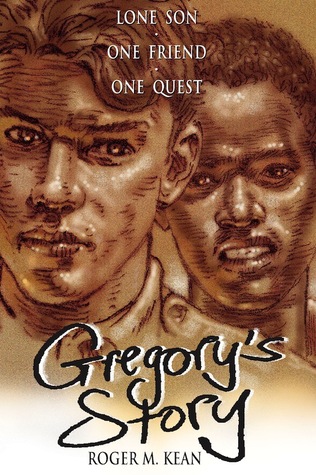
Roger’s latest piece, Gregory’s Story is now ready for its debut. Without further ado, I leave you in Roger’s capable hands. I hope you enjoy!!

MORE A COMPANION THAN A SEQUEL
Roger M. Kean, author of Goodreads M/M Romance and Queereaders March 1013 Book of the Month “A Life Apart”, plunges again in the burning deserts of the Sudan.

Gregory Hilliard wants to discover his father’s fate, deep in the Sudan, at the hands of Dervishes 15 years before. Attached to General Kitchener’s army in 1897, he goes to defeat the Mahdist fanatics with his friend and lover, the Ja’alin Zaki. Gregory faces a tragic and at the same time life-enhancing mystery with its roots in far away England… and one which might yet rip the two lovers apart.


My new novel, “Gregory’s Story” can be read as a standalone novel, but it’s much richer treated as following on from “A Life Apart.”

I had completed work on “A Life Apart”—the story of Edward and Richard Rainbow—and put it aside to let it rest for a bit before starting final edits. That’s often when you see missed opportunities and do small, perhaps even quite large, rewrites. As it happened I always had the notion of bringing the two Rainbows back for a second outing, but the more I thought about the possible sequel the more I wanted one or two new main characters as the focus, and so Gregory Hilliard sprang to life in my mind, with Edward and Richard as secondary players in the adventure. Gregory, I decided would have a father who had disappeared during the massacre of British officers commanding Egyptian troops in 1883 at the battle of El Obeid, and a mother convinced his father still lived. Gregory had a quest as soon as he was old enough—discover his father’s true fate.

I started to rough out the first few chapters of Gregory’s early life, how he ended up being born and brought up in Egypt, of his first encounters with the Ja’alin Arab boy Zaki and how they came to be lovers… but I needed a link between the two novels. And then it hit me! I went back to when Gregory was about four, worked out the timings, and created a terrible accident where the child would have met his death were it not for the timely intervention of the handsome teenaged Trumpeter Smith, really Edward Rainbow, at the time a runaway from his English family.

Of course, that meant going back to “A Life Apart” at the very last minute and writing the same scene from Edward’s point of view. And that was my link between the two novels; and off went “A Life Apart” for publication.

That incident in the crowded streets of Cairo is crucial to the development of the early plot for “Gregory’s Story,” especially in his affinity for the now much older Edward (they both had somehow “lost” their fathers) and later for Edward’s “brother” Richard. Young Gregory is also drawn toward Edward at a more basic, sexual, level—although he barely acknowledges it—which creates another dynamic in the plot development and which has an important role to play later on.

In “A Life Apart” I explored the endless problems faced by two young men in love with each other in a Victorian-military setting, an era and situation in which homosexuality was a forbidden subject and any men caught in the act, or even accused of it, faced long prison sentences with hard labor. The fate of Oscar Wilde at the time is telling, and it gets a mention in “Gregory’s Story,” but for Gregory and Zaki there is an added complication. Not only must Gregory hide his sexual inclination and his love for Zaki, he must also face the extreme prejudice of his white peers, who regard all Egyptian and Sudanese as an inferior species, and with whom a relationship beyond master and paid servant is impossible, abhorrent, disgusting.

However, what I found fascinating in writing Gregory was that he feels himself more an Egyptian than a stiff upper-lipped Englishman. He strides two countries, two utterly different societies, and that makes his take on life infinitely more interesting. Nevertheless, it strains his relationship with Zaki because the two do have to play-act according to the white rules—Gregory the white officer, Zaki the black servant boy. The only redeeming aspect of this English colonial imperialism is the two boys’ relationship with Edward and Richard Rainbow, two men who know what it is to live a continual lie in order to preserve the purity of their love for each other. And both older men have more than enough experience to know the value of deep friendships with the native people.

So “Gregory’s Story” is often a satire on British imperialism as much as it is an action-adventure set in a very real history as the Anglo-Egyptian army slowly moves up the Nile in 1897–98 to crush the Mahdist rebellion that had brought down General Charles Gordon at Khartoum in 1885, the setting for “A Life Apart.” And ultimately the mystery of the fate of Gregory’s father plunges him into a situation where he must decide whether to accept his station in life and in so doing lose Zaki forever.


EXTRACT

CHAPTER 2
A Cairo Street Arab, September 1896

Gregory envied his friend Zaki’s exile down in Habibah al-Suef’s shady yard below. But his own sentence would soon be commuted when Habibah and his mother finished their gossip and then he could run off to the shooting range for an hour’s practice with pistol and rifle, and then to the exercise yard he and Zaki frequented. Gregory turned his head from the overhanging oriel where he sat cross-legged on the window seat. The sun angling in through the glass panes burned his left thigh below the hem of his khaki shorts. His neat dress, European for the visit instead of the loose and comfortable djellaba he’d rather wear, had begun to cling uncomfortably from sweat forming under its tight confines. Across the wide room his mother spoke in quiet tones with her pupil. In truth Habibah no longer required his mother’s tuition and the regular afternoon visits were expressly for the exchange of gossip, just about every morsel of which bored Gregory. His sharp hearing picked out the familiar words in Habibah’s elegantly accented English.

“He is such a handsome boy, Mistress Anne. How proud you must be.”
Habibah always started this topic in the same manner. The objective was simple: by contrast with Gregory’s esteemed wonderfulness, show up Zaki.

“I never will understand it. A Ja’alin as well. Cairo teems with more suitable companions than…”

She’ll be waving her hands now, lost for words. He switched his gaze and glanced down again. Zaki had stirred and started chatting with the woman who looked after the household laundry. He looked up suddenly. Gregory raised a hand, waved, and received a cheery all-white-teeth-in-black-apple-cheeks grin in return, which caused him to shiver pleasantly. The woman offered Zaki a corner of her musallah. Gregory caught the faint call of the muezzin > from… the Mosque of Ibn Tulun was probably the nearest. As the adhan rang out over the streets, to be joined in a musical wailing wave by other muezzins near and far, Zaki oriented himself and bowed his head to the prayer mat, his tightly coiled hair like the pile of a black Berber carpet. Gregory knew well the tight nap of Zaki’s hair and mentally ran a hand over it with a renewed shiver, and from his eyrie joined his friend in prayer. He was used to performing the rak’ahs which made up the full salah, although he did not pray five times a day as prescribed (and to be honest, neither did Zaki observe all of them).

His mother greatly disapproved of him “aping” the Muslims. “You are a Christian,” she berated him after finding him forehead to a musallah with Zaki. On that occasion Nabila had chased the “nasty Ja’alin heathen” from the house—like Habibah, though eons apart socially, Nabila was a Copt. He found the whole business odd, since his mother also insisted that the god of the Christians (she graciously included the Copts), the Jews, and the Muslims was really the same being. When he interrogated Zaki on this, his expert on Islamic affairs shook his curly-knotted head and said he’d have to ask. A day later he reported what a local imam told him, that both of them were ahl el-kitab, along with any Jews.

“People of the Book,” Gregory translated, no wiser really, but he assumed it matched his mother’s assertion.

Unbidden, his mind side-slipped from the sublime to something baser. He laughed to himself at what Nabila and Habibah al-Suef might think if they knew what he and Zaki got up to when out of sight of censorious adults. Rather a lot more than praying together. While it was the son of a French stockbroker who initiated Gregory into the secrets of sex not so many years before, it was Zaki’s precocious uninhibitedness which transformed the purely mechanical into something wonderful, something which only they shared. At first they pleasured each other by fondling and rubbing, although a deep instinct told Gregory what they were doing should be kept secret from anyone else, especially grown-ups. But as they matured toward adolescence, they soon discovered how to make the strange and wonderful sensations stir in belly and groin and then explode like going for a desperately needed piss only… well, so much stronger a feeling. And the resulting emissions, enjoyed together, cemented their feelings in a way that made Gregory go fuzzy inside whenever he thought of Zaki, and which Zaki returned in all manner of ways: by looks, private touches of shoulder, hip, hands, gently tapped heads, even feet when they sat side by side on a high wall, legs dangling.

Looking down at Zaki in the yard, he grinned and unconsciously squeezed his cock. Loose-limbed but so elegant in his economic movements, just a glimpse of Zaki’s dark smooth-skinned legs whenever he hitched up his djellaba made Gregory feel breathless with a strength of excitement he didn’t know how to express. Yes, French and English snobbishness perfectly mirrored Habibah’s high-born Egyptian disdain, for Gregory’s white peers frowned on his friendship with Zaki and were often as vocal in their disapproval. He simply shook it off.

In fact years ago he’d shaken off several of the expatriate children of his acquaintance after Zaki came into his young life. The Ja’alin boy’s bubbly and irreverent sense of humor appealed to Gregory. It wasn’t long before Zaki mattered to him much more than any of his European friends did. But in that, even as youngsters, Gregory innately understood that his close friendship with a native would never be simple or easy; would never be really accepted by his white acquaintances in whom his mother put such store. But what could he do? The first moment those big, round, dark eyes glinted happily when Nabila introduced them and Gregory initiated the smiling, he was smitten.

His few European friends were all transitory anyway, here one day, moved on with their parents’ important administrative roles the next. And they all hailed from big places like Paris or London or Berlin, cities which meant nothing but which they used to lord it over him by calling him an Egyptian fellahin. Little Gregory shrugged it off and made out that he was proud of being a Cairene—which he was, really… at least when the others used it as a tease. Sometimes, on his own, the taunts stung and he never felt like the tormentors were real friends. Zaki was so different. Within weeks… no, if he thought about it, perhaps only days… of being in each other’s company, Zaki became an essential part of his life, and it thrilled Gregory when Zaki responded as though he felt the same. Were they not always able to win the staring game against Gregory’s itinerant cronies? This English lad, that French boy, none could withstand Zaki’s unblinking gaze and had to break away first with growls of irritation. Gregory could engage Zaki’s dark eyes and they would stare into each other for ages before bumping noses to end the session. Gregory also won the staring game against the European boys as well.

“Kite-eyes,” Zaki labeled themselves. “Able to pin the prey and kill at a distance.”

Even when the others made it plain they didn’t want Zaki to “stick around,” he still hovered and looked out for Gregory. One day, one of the older boys—whose father had come to Egypt for a year in some snooty capacity—teased him for being an Egyptian babu. “I say, Hilliard, what school are you put down for when you grow up?” he’d asked in the nasal accent Gregory associated with all the English gentry in Cairo.

“I don’t know.” The question puzzled him because he learned stuff at home.

The worthy’s face contorted into a mock-incredulous sneer. “You must know what place your pater has booked for you in England, surely?”

“I’m prob’ly staying here.”

The bully shoved his face in Gregory’s and aped his words. “Oh, prob’ly, hey? Can’t even speak proper English, you dirty fellah-heen!”

This conversation ended abruptly when Zaki head-butted the boy in the stomach and sent him sprawling.

The truth, he told himself without any feeling of regret, was that he felt more an Egyptian than he ever did an Englishman. When alone, Gregory and Zaki played on the small lawn in his mother’s shady court, wrestled and fought as boys will, and rolled together on the coarse grass the part-time gardener struggled to tame. Gregory loved to snuffle in the crook of Zaki’s lean neck and breathe in the smell of him—warm, like rice newly cooked in coconut milk and citrus from the fruit he handled every day. They wriggled together and inhaled the different scents of sun-blushed skin.

As they turned thirteen and fourteen Zaki became everything and Gregory’s social life with other whites dwindled. As with the haughty sons of temporarily expatriate fathers, so it was with girls. He began to question his feelings for Zaki. Intense, warm, fuzzy, comfortable. They understood each other at a deep level, heightened by their mutual fluency in the Ja’alin dialect, which excluded others even more than his friendship with a Sudanese boy did. The word love had popped into his mind on several occasions for what they did in private. He wasn’t at all sure whether love described his feelings for Zaki… should it be more, or less? In the few English books his mother deemed suitable for his age, any mention of love suggested the emotion was only appropriate between a boy and a girl. But he knew hardly any girls to challenge this. Egyptians kept their women of any age hidden fast away, and the Europeans weren’t much different. There was, of course, Rose Something-Or-Double-Barreled-Other. He wondered why Europeans always had to have so many names.

“You’ve got two,” Zaki pointed out.

“That’s nothing compared to, to… Sir Charles Frederick Mallord Clifton-Wellbury,” he retorted, naming a luminary of the foreign powers governing Egypt’s fortunes… or lack of them.

“Well, I’m simply Zaki, but the imam who berates me for being a wicked person is Alhajji ibn Abd al-Aziz ibn Abd al-Rahman.”

Gregory had met Rose Something-Or-Other on a few occasions at children’s parties, when she regarded him briefly with a blank face. Once, she poked her tongue out at him when she thought no one was looking. Gregory didn’t know what to make of this, but he was certain he had no feelings for her like he did for Zaki. And now they were all older (she was due to return to England at any time, he overheard his mother saying) he was no clearer. They had passed in the street on a couple of occasions, she under the protection of her governess, he with Zaki. He thought he detected a glint of interest as she sailed serenely and silently by, the slightest hint of polite recognition before turning up her snub nose at his native dress and companion.

His thoughts drifted reluctantly from Zaki to the conversation behind him. Habibah was moving into full steam…

“But, Mistress Hilliard, Anne, I mean… A Ja’alin, a Nilotic native of deepest Nubia!”

Gregory sensed the Egyptian gentle-lady’s shudders. But, as always, his mother’s calm, amused voice cut across.

“Nubian, he may be, but Zaki has his good points, Habibah.”

“Well, I’m sure as Gregory’s mother you know best, but it offends my sensibility to see a… a black native consorting with your handsome son.”

Handsome?


As if allowing us to read his work was not amazing enough, Roger has offered up two copies of Gregory’s Story. To enter for your chance to win, leave a message along with your email address. The contest will run from Sunday July 28 thru Sunday August 4th, 9pm EST. The winners will be chosen randomly. 


Thank you so much Roger, for stopping by and giving everyone a chance to win your work! You are an amazing writer. 

Friday, April 20, 2012

The Men of Ludlow

This week, I had the pleasure of chatting with Roger Kean and Oliver Frey. I have to admit developing a bigger crush than I already had for the pair. Roger and I belong to the same critique group, in which after reading his work I had to know more about him. Through him I was introduced to his talented partner Oliver. You can try all you want, but its hard not to fall in love with these two!


Where did you guys meet?

R: I met Oliver at the London School of Film Technique (now the London Film School) in January 1969. After an education at Highgate School, North London—what the Brits call a “public school,” i.e. private fee-paying—I went to Hornsey College of Art on a one-year foundation course, then graduated to Hornsey’s Fine Arts department (painting), but became disillusioned with the whole thing. In 1968—the year of the student riots in Paris—the Hornsey students rebelled and occupied the college for six months. In that time they showed films all night to keep students in the buildings, and I watched literally hundreds of movies. When the college returned to normality later in the year, I’d made up my mind to switch disciplines.

The film school ran two-year courses starting each term (semester), hence our commencing in January 69. On the first day all the course of 42 individuals gathered for induction, and I saw Oliver come through the door, wearing a severe-looking military-style dark blue mackintosh. For me, it was love at first sight across a crowded room. However, he took no notice of me until a few weeks later when all the students had to present a script for a 10-minute silent black-and-white 16mm film. After voting, the seven winners had a crew of six, each having to undertake all the roles of a film crew in turn. Oliver liked my script, Abramacabra (a corpse that doesn’t want to be buried), and in the course of shooting, we became friends and, somewhat later, sex buddies when we shared an apartment with two other friends of mine. It’s fair to say that our relationship was rocky, if continual, in the early years before it settled into the love we’ve shared for the past 25 years.

O: Just as Roger describes above. At that time neither of us had publicly “come out,” and I, for one, wasn’t entirely sure of my leanings and a Roman Catholic too, with the attendant baggage of guilt. Even after the first sex experiences, Roger’s professed love for me felt uncomfortable and too emotional, “men should be friends”—what a cold character I must have seemed.

It was only when, a few months later, I fell hopelessly “in love” with a young actor appearing in one of our movie exercises that I became receptive to Roger’s feelings—and thus began our real relationship.

Where are you from?

R: I was born in Solihull, at the time a village on the south-eastern side of Birmingham in England’s Midlands. Now it’s a part of the Birmingham conurbation, close to the International Airport. I went to a very typical British “secondary modern” school until almost my eighth birthday, when my father took a job in Lagos, Nigeria. I lived out there for 18 months, until my parents’ first leave (three months back in “Blighty” to thicken the blood) and was left at a private preparatory school in the Cotswolds, and later at Highgate. Until 1965, I flew out for most school vacations to Lagos and had a wild old time.

Oliver and I moved from London to rural and medieval Ludlow in Shropshire late in 1982.

O: I was born in Zurich, Switzerland. At age eight my family moved to London, where my father worked for a Swiss company for the next three years. I got to learn English at the local school and got my first taste of art when I started reading Eagle, a weekly comic for boys and began copying the exciting picture panels (space heroes, cowboys, tales from history).

After a six-month stay in Milan, Italy, it was back to Switzerland, where I had to re-learn my forgotten German language (we were Italian speakers at home). I completed my education, did the obligatory military service, and started an aborted spell at Berne University before heading for London and film school. I had worked through the U.S. Famous Artists home-learning course on illustration by then and also started making 8mm “action” home movies.

Once in London I was lucky enough to be able to put my learned illustrating skills to good use drawing war comics for an English publisher, which greatly helped financially during my student years, and became my main profession when I could not get work in movies. Things never quite work out as planned…


Ludlow


How many books have you written together? Separately?

R: In the sense of writing collaboratively, there hasn’t been much, but Oliver always has opinions on what I’ve written, and suggests ideas. While at Hornsey and LFS I wrote four novels. The first was an unfinished monstrosity called Terminus, which suffered with every debut autobiographical error possible, including extreme arty pretensions (blame J.P. Sartre). The second, The Days of Falling Shine, was a science-fiction, post-apocalypse story. I had an agent, but he couldn’t place it. Then came The Day I Stripped Off in Leicester Square, a dialogue-driven romp with Monty Python overtones about the movie business in London. My agent almost got that placed. The fourth, Caligula, excited interest, but in the end it was rejected (see below on my failure at writing monsters).

Oliver and I worked on a horror movie script called Blood of Satan. He roughed out the plot and I wrote (in pen and ink) the action based on his ideas, and we both worked on the dialogue. We made a ten-minute pilot, but the advent of modern-day horror killed off the grand guignol genre. I turned that into a novel, and my agent had it accepted by New English Library for publication, but their marketing department rejected it for the same reasons the movie version dropped out of sight.

When the two of us went into business in the burgeoning gay magazine market in the late 1970s, we collaborated over short and longer fiction. In the HIM Gay Library series, I wrote two novellas, Boys of Vice City and Blood & Lust, and Oliver one, Warrior Boy, which I also completed because he was too busy by then illustrating the magazines and other stories.

When it comes to Oliver’s comic-strips, my input is usually restricted to situational suggestions for him to work on.

One interesting project we collaborated on was a series of those screw-your-eyes-up 3D puzzle picture books, one of which was erotic. The system worked from a greyscale image painted by Oliver where he had to imagine the tones from light to dark on the basis that darker is farther away and lighter closer up. So no normal lighting effect. Then I had a program which interpreted a series of complex patterns I created in Photoshop and wrapped them over the greyscale image to create the finished effect. They worked really well and sold loads for the publisher who commissioned them at the height of the fad. But it gave me a headache, because I spent so much time looking cross-eyed at the screen to see how well each picture worked. For the erotic one the rule was, anything goes but no penetration…

What sparked the idea behind BOVC?

R: Our gay publishing company, Street Level, produced several monthlies, including HIM International and Teenage Dreams. These usually had one or two short stories submitted by various writers, illustrated by Oliver, and their popularity led us to launch the HIM Gay Library series (there were twelve in all). Only a few authors we knew could handle something running to 40,000 words, so I set about writing one to kick the series off. I’ve always enjoyed the kind of fiction written by the likes of Evelyn Waugh, in which the MC is in many senses an innocent who succeeds even though most things are done to him rather than through his own conscious actions. We needed an American element, so welcome to Gil Graham of Los Angeles. We needed exotic, so he’s sent to Rome. I needed to write about a subject I knew well, so I dumped him as a gofer in a movie crew. And then I just wrote… I can’t remember precisely, but I think it took less than two weeks to write Boys of Vice City. The sex scenes were based on personal 
experience, natch, but also those situations you wished you had enjoyed but somehow never happened.

The modern Bruno Gmünder version has been completely rewritten from top to bottom and although it contains some of the original illustrations, Oliver did several new ones. The follow up novels (…Disco City and …Two Cities) are entirely new and newly illustrated. I also wrote for the series Blood & Lust—a modern arena gladiatorial fight to the death scenario. I beat Stephen King’s The Running Man by almost two years (and The Hunger Games by a hell of a lot more…). That has also been utterly rewritten (thanks for the invaluable input, Charles Edward) and modernized in its technology for a Bruno Gmünder release hopefully next year.

What can we look forward to for the second book? (besides those hot pics?)

R: In Boys of Disco City (July), the two MCs, Gil Graham and his English bf Mike Smith have fled Rome for London, where they set up home in an apartment in North London. They both get work at Pinewood Studios and look set for a carefree time, hopelessly in love but happy to get it together with all and sundry in discos, cruising Hampstead Heath, making porno movies, and so on. Then the egregious producer from BOVC, James Rosen, turns up, hell-bent on revenge. There is plenty of hot action, but the ending is a cliff-hanger (and may need a few hankies as well).

But not to worry, the third book, Boys of Two Cities (November), puts everything to rights…

Oliver is urging me to start on the fourth. I’ve a rough synopsis.

How did you choose the genre you write in?

R: I’ve always enjoyed writing, and indeed, done it for a living for many years in magazines and reference subjects such as history. (My credits there for our former company Thalamus Publishing are: Forgotten Power: Byzantium—Bulwark of Christianity, The Complete Chronicles of the Emperors of Rome, Exploring Ancient Egypt and, with Angus Konstam, Pirates—Predators of the Seas. I also wrote and produced The Fantasy Art of Oliver Frey.)

I guess, like any gay man, I longed to introduce a steamier element into the writing, but couldn’t really do it in my earliest efforts aimed at the mainstream, but with Street Level those inhibitions went out the window. I would call myself a gay writer more than M/M. Indeed, until I met online my mentor Charles Edward I had no idea so much horny M/M fiction was written and read by women. To a degree that changed my approach to the subject matter, but I have found the ePub M/M requirements a restraint to creativity, and I’m not sure those publishers are helping to contribute to a lively and varied genre. I like a HEA ending as much as anyone… if it feels right. I tend more to HFN and will write Not Very Happy At All endings if that’s what the tale demands.

In that sense, German publisher Bruno Gmünder is ideal for me. They don’t have died-in-the-wool rules as to what makes a good read. They do gay stuff for gay men and are supportive while not getting deeply involved in an editing process. In fact I typeset the books to their template in InDesign and Oliver inserts his illustrations where he thinks they should go for best effect. Then we send the files off to Germany and they simply send the PDFs onto the printer (in Korea).

A book like Felixitations isn’t quite their market, which is why I’ve gone the route of self-publishing, although the returns are vastly lower.

O: In the mid-70s, having established a lucrative career in illustrating childrens’ books and magazines, I increasingly felt the need to express my, by then acknowledged, gay sensibilities. Erotica was my choice! I impressed a gay publisher in London with a steamy three-page comic, and not too long after I’d created the Rogue character, whose monthly escapades in HIM magazine were to continue into the early 80s—Bruno Gmünder published a collection of his adventures (Hot For Boys: The Sexy Adventures of Rogue) in 2011, which I colored-up from the original b/w. All the works mentioned I signed with my real name (proud to be gay gesture), but when I began creating totally explicit comics in the late 90s I became Zack to avoid causing embarrassment for the main-stream publishers I worked for. Inevitably, as the Internet flourished it became impossible to divorce Oliver Frey from Zack… and now I sometimes don’t know who’s the real me!

Which comes first...the picture or the writing?

O: With the gay comics, which I both write and draw myself (as opposed to the straight mainstream comics I used to do, where I was given a script to illustrate) either an image or situation, or character comes first, but then writing has to take over—although I write balloon text straight into a page, adding suggested picture frames as I go along and imagine how the story moves. I treat my stories like movies and try to infuse them with as much dynamism as I can.

With Roger’s fiction, I take the finished text pages and find the best bits to illustrate.

What were the challenges (research, literary, psychological, and logistical) in bringing your stories to life? 

R: In terms of research, the challenges match the demands of the story (location, setting, period). Before the Internet I generally opted for locations and backgrounds I knew well. For the original Boys of Vice City, my thorough knowledge of the film-making processes meant I didn’t have to worry about that aspect and could concentrate on the sex situations and the background of Rome. At the time of writing, I’d never been to Rome, but as a cartographer and geography lover I pored over city maps. Rome’s now like a second home, so I brought all that personal knowledge to the Bruno Gmünder rewrite.

Similarly in Blood & Lust, it was easy to modernize the video technology. In the original, the arena is surrounded by those behemoth broadcast TV cameras with operators pushing them around on dollies. In the rewrite it’s lightweight digital cameras all on Louma cranes, remotely operated from a control center. And with the digital editing I’m fully conversant with Apple’s Final Cut Pro, which I use all the while, so that was easy to re-imagine. In Boys of Disco City there is a scene where Gil has to change a film roll in a camera magazine using a light-proof change bag, which has his hands trapped inside the thing, so he has no way of stopping a character coming along and jerking him off. The change bag experience is personal, the sex only wishful thinking. The possibilities of that scene have been in my mind ever since no one took advantage of me while changing film rolls. Ah well, that’s fiction for you!

Since the Internet, research has become a great deal easier and more flexible. In a section I’m working on now for Re-Felixitations, set in Manila and Cebu in the Philippines, Google Earth is invaluable. I was there in 1988, and things physical have changed enormously, of course, but to see the city from above helps bring back all the memories of the place, even down to the damned Hyatt Regency Hotel which has moved elsewhere. I finally tracked it down to the Midas Hotel on Roxas Boulevard because it was in the right place and looked the right shape. More digging revealed the change of hands some years back.


In the case of “Two Little Boys” and “Dustoff Vung Tau” in Felixitations, I wasn’t in the Vietnam War, I’ve never been to Little Rock, AK in 1955–58, so again Google Earth (and Wikipedia, with care and double-checking) was invaluable. But once you have absorbed the stories of veterans of the war, you still have to get inside your own head to imagine what it was like and put that down on paper, hoping you have created a pen portrait that grabs the reader.

As to the literary aspects, I’ve tried to strive for a style that reflects my interests and my world view. I do take structural ideas that appeal from the work of other authors, but then put them through the flux of my own imagination as far as I can. I like long words and have to curb myself and aim for a clean, simple style. I’ve learned a lot in the past two years about grammatical structure, word order, sentence construction, and plot logic. But fifteen years as an editor cleaning up the worst excesses of authorial purple prose for our reference books has been a great advantage.

I’m not sure about the psychological aspect of my writing. Oliver always says I’m good at ordinary boys next door and creating a romantic feeling, but useless at monsters, really bad guys, and bloodthirsty action. He’s right, but I try. In Felixitations, the Felix of “Knowing Felix” is something of a monster, but he is based on someone I knew (although fictionalized as well). Perhaps my best monster is Tommy Horton in the story “What’s A Boy Supposed to Do” (will appear in Re-Felixitations). I just set him up as dysfunctional and delusional and he wrote himself. I had just finished editing a home video which used a couple of Smashing Pumpkins’ tracks from Siamese Dream, and the lyrics of Disarm seemed so right for Tommy’s inverted world, and colored how I wrote him.

On writing sex scenes, I follow the edict of artist Tom of Finland, who said words to the effect that if you don’t have a boner when drawing a scene, it won’t turn anyone else on. I’m afraid I write the steamy scenes like that, in a state of continual and painful priapism.

For Oliver...How do you come up with an image for the stories? 

O: With Roger’s fiction the stories suggest what’s going on, and I imagine the sexiest way to illustrate action and mood. I don’t use photographic models, I just invent poses as I see them in my mind’s eye—working from photos leads to a wooden look.


With the comics, pure horny fantasy rules my pen, just as Tom of Finland suggests above… I’ll divulge no more, apart from stating the less you get in real life, the more you create in your dreams.

Has there ever been a picture or painting you created that was your favorite?

O: Not really. They’re your favorites while you’re painting them, until the next one begins to take over. As a ‘serious’ artist I’d have to choose Snake Warrior, which is a ‘real painting’ and seems to have attracted the most enduring praise from fans worldwide.


Roger, what is one thing you admire about Oliver?

R: When you have lived and worked together for as many years as we have, it’s hard to pick on one thing to admire. Obviously, I admire his artistic talent (not least cos it’s earned us a living…), but I admire his moral integrity and, above all, his unstinting support for my endeavors. Oh, I love him as well.

Oliver, what is one thing you admire about Roger?

O: His tenacious attitude and dedicated work discipline, and the ability to successfully turn his hand to so many things: film editing, writing both fiction and factual (from videogames magazines to history and, yes, gay publications), carpentry, and cooking (which he loves). I admire his always fair and moderate view of fellow human beings, and the patience and love he has and still shows me daily. I could go on, but Roger being a Leo it would go to his head. ;-))

What one thing that has happened in your life has made the biggest impact on who you are today?

R: Without any doubt, meeting Oliver at the film school. Before, I was a lost late adolescent in search of an eternal friend, knowing I had love to give but no one in whom to invest it.

O: Not that I realized it at first, but meeting Roger—not many of us is blessed with such constancy in life, while also sharing so many mutual adventures and aspirations.

What's the inspiration behind Felix?

R: There is no overriding inspiration beyond having a collection of disparate short stories for which I couldn’t find a home. A year ago I read Josh Lanyon & Jordan Castillo Price’s Petit Morts I, Sweets to the Sweet, with the mysterious character of Chance linking the sections, and it impressed me. I didn’t want to copy them, and anyway I already had half of the stories sitting there ready. It occurred to me that several did have connections and that with some rewriting and the link of a character who pops up in each, they could work as a whole.


I would like to thank Oliver and Roger for stopping by and allowing us into their lives. 


If you would like to know more about Oliver and Roger, here are a few great links to look into:
http://oliverfreyart.com
http://zack-art.com
http://recklessbooks.co.uk
Smashwords